A playing career eventually changes. Sometimes the change is expected. Sometimes it arrives before someone is ready. But leaving one role does not mean leaving behind everything that role gave you.
The five stories
Chapter 1 · Pat Hentgen — CHANGE

Pat Hentgen did not arrive in Toronto as the pitcher he would eventually become. He reached the Blue Jays in 1991 still trying to establish where he belonged, with his early opportunities coming in different roles, including work out of the bullpen.
Then opportunity became responsibility. By 1993, Hentgen had earned a place in the starting rotation. Toronto went on to win its second straight World Series, and Hentgen had become part of something bigger than simply reaching the major leagues. He had become someone his team could depend on.
Three years later, that responsibility led somewhere even greater. In 1996, Hentgen became the first pitcher in Blue Jays history to win the American League Cy Young Award. It was the highest individual recognition of his career, but it also represented something deeper: the pitcher who once had to find his place had become one of the best at his position.
For years, that was how Hentgen mattered to baseball. He took the ball, competed, carried innings and helped his team win. But a playing career eventually asks every athlete a difficult question: What happens when you can no longer contribute in the way that once made you valuable?
Hentgen’s career eventually took him from Toronto to St. Louis and Baltimore before bringing him back to the Blue Jays. He retired after the 2004 season.
The pitching stopped. What the pitching had taught him did not.
Hentgen later returned to the Blue Jays organization, working with pitchers and serving in coaching and advisory roles. That change gives the earlier chapters of his career new meaning. For years, his value came from what he could do with a baseball in his hand. Later, it could come from what he understood because he had once held it.
Experience had become something he could pass forward.
👀 LOOK AT THE CARD AGAIN
The card preserves Hentgen as a player. That is what baseball cards do well: they capture a season, a uniform and a moment before time moves forward.
But they cannot show us what that moment may eventually become.
The pitcher pictured on this card would one day stop pitching, but the knowledge gained while becoming that pitcher could continue. Suddenly, the card represents more than a playing career. It represents years of experience that could remain useful long after the statistics stopped accumulating.
💎 HIDDEN GEM — CHANGE
Sometimes what needs to change is not your purpose — only the way you serve it.
Hentgen once helped the game through performance. Later, experience gave him another way to contribute. The role changed, but the ability to matter remained.
💭 HIYASAT REFLECTION
We often measure our value by what we can do right now — our job, title, skill or the role others recognize us for. When that role changes, it can feel as though part of our usefulness changes with it.
But experience does not disappear simply because the role that created it ends. What we have learned through success, struggle, adjustment and time can become something we carry into the next chapter.
Maybe change is not always asking us to become who we used to be.
Sometimes it is showing us another way to matter.
Chapter 2 · Paul Spoljaric — REDEFINE

Paul Spoljaric reached the major leagues with the Toronto Blue Jays in 1994. For a Canadian pitcher born in Kelowna, British Columbia, reaching baseball’s highest level with Canada’s team gave the beginning of his career an added connection to home.
But reaching the major leagues does not guarantee staying there.
Spoljaric moved between starting and relief work as Toronto searched for where he could contribute best. Baseball eventually carried him beyond the Blue Jays to Seattle, Philadelphia and Kansas City. By the end of 2000, his major-league career was over.
If his story were measured only by MLB seasons, this might be where it ends.
But leaving the major leagues did not mean leaving the game.
Spoljaric continued pitching professionally, and another opportunity gave his experience a different purpose. He represented Canada internationally, including at the 2004 Olympic Games in Athens and the 2006 World Baseball Classic.
Years after his final MLB appearance, he was still taking the mound — only now, the uniform and the measure of success had changed.
That gives the earlier part of his career new meaning. In the majors, success could be measured by earning and keeping a place on an MLB roster. With Canada, the same ability could serve something beyond maintaining a major-league career.
Spoljaric had not returned to what he once had.
He had found another way for baseball to matter.
👀 LOOK AT THE CARD AGAIN
This card captures the version of Spoljaric most collectors are likely to recognize: Paul Spoljaric, Toronto Blue Jay, major-league pitcher.
But the card freezes only one definition of his career.
It cannot show the Canadian uniform he would later wear or the international stage that awaited him after his MLB days were finished. Knowing those chapters changes what the card represents.
It becomes evidence that one ending does not get to define everything that follows.
💎 HIDDEN GEM — REDEFINE
Sometimes moving forward requires changing the way you define what still counts.
Spoljaric did not need another long major-league career for baseball to remain meaningful. When one measure of success disappeared, another form of contribution remained possible.
The destination changed.
The value of continuing did not.
💭 HIYASAT REFLECTION
We can become attached to one definition of success — a position, title, achievement or destination. When that version becomes unavailable, it can feel as though everything we worked toward has lost its value.
But experience does not belong only to the goal that first created it. Skills can find another purpose. What we have learned can serve another place. A journey can remain meaningful even when it no longer looks the way we once imagined.
Sometimes moving forward does not require proving that the old definition was wrong.
It requires allowing ourselves to create a new one.
Chapter 3 · John Cerutti — TRANSITION

John Cerutti spent most of his major-league career with the Toronto Blue Jays, but pitching was only one way he would eventually become part of the game.
He reached Toronto in 1985 and developed into a dependable left-handed pitcher. His strongest season came in 1989, when he went 11–11 with a 3.07 ERA as the Blue Jays captured the American League East. Cerutti had found his place on the mound, helping a team that was becoming a regular contender.
But baseball careers rarely remain in one place for long.
After six seasons with Toronto, Cerutti pitched his final major-league season with Detroit in 1991. The statistics stopped there. The relationship with baseball did not.
Cerutti eventually moved into broadcasting, where the experience he had gained on the field became useful in a completely different way. He worked as an analyst and later became part of Blue Jays television broadcasts, explaining the game he once played to the people watching it.
That transition changed what his baseball knowledge was for.
As a pitcher, Cerutti had used that knowledge to read hitters, execute pitches and help his team compete. As a broadcaster, he could use the same understanding to help others see what was happening beneath the surface of the game.
He no longer needed to stand on the mound to contribute something meaningful.
He needed a different place from which to see it.
👀 LOOK AT THE CARD AGAIN
This card captures Cerutti during the role baseball first gave him: pitcher.
Look at it knowing what came later, and the image becomes only one chapter of his relationship with the game. The player pictured here would eventually exchange the mound for the broadcast booth.
Yet the years represented by the card did not become irrelevant when he made that transition. They became the foundation of what he could offer next.
Cerutti died unexpectedly in 2004 at only 44 years old, while still working as a Blue Jays broadcaster. His life ended far too young, but the different chapters he lived remain connected by the same game.
💎 HIDDEN GEM — TRANSITION
Moving on does not always mean leaving something behind.
Sometimes the experience from one chapter becomes the very thing that gives the next chapter its value.
Cerutti changed roles.
His connection to the game continued.
💭 HIYASAT REFLECTION
Transitions can feel like dividing lines. There is what we did before, and then there is whatever comes next. We may even believe that changing direction means the years behind us somehow matter less.
But experience can travel with us.
What we learn in one role can shape how we understand another. Skills can become perspective. Participation can become guidance. Something we once did can become something we are able to explain, teach or share.
We do not always have to preserve the old role to preserve its meaning.
Sometimes the next chapter begins by carrying the best of the previous one with us.
Chapter 4 · Darnell Coles — GIVE BACK
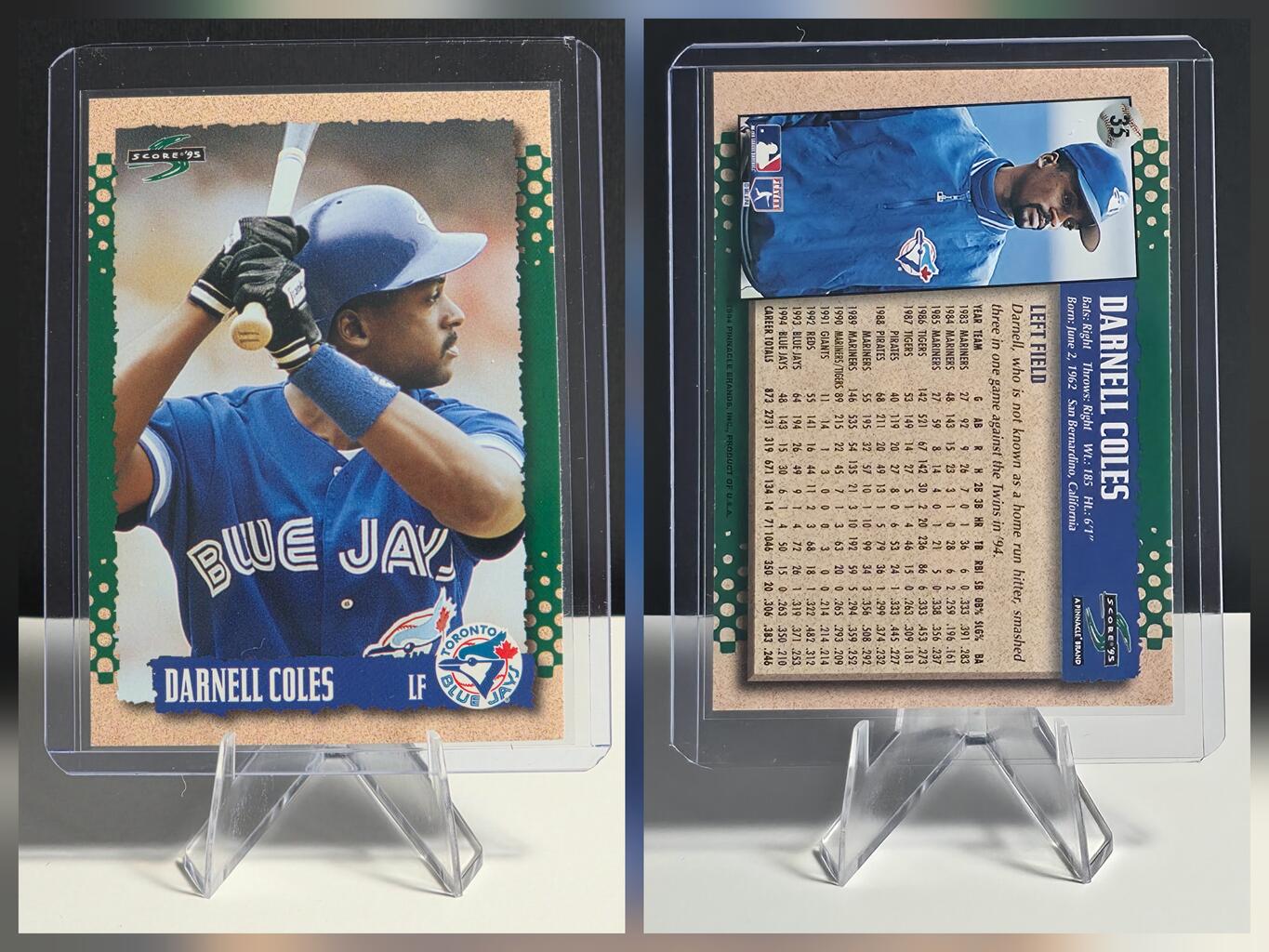
Darnell Coles spent much of his baseball life adjusting.
He reached the major leagues with Seattle in 1983 and soon showed the power that could make him valuable. His best offensive season came with Detroit in 1986, when he hit 20 home runs and drove in 86 runs. But the success did not give him a permanent place.
Instead, baseball kept moving him.
Coles played for eight major-league teams during a career that lasted parts of 14 seasons. Toronto became one of those stops when he joined the Blue Jays in 1993, contributing to a team that would go on to win the World Series.
By then, Coles already understood something a long career eventually teaches: staying in professional baseball often requires more than talent. It requires learning, adjusting and finding ways to remain useful when circumstances change.
Those lessons became important after his playing days ended.
Coles moved into coaching and player development, working with young players before eventually serving as a major-league hitting coach. The player who had spent years trying to solve pitchers could now help other hitters solve the same problems.
That gives his long, well-travelled career another meaning.
Every team, adjustment, productive season and difficult stretch had given Coles something beyond statistics. They had given him experience — not only about hitting, but about surviving the uncertainty that comes with professional baseball.
Eventually, that experience became something he could give away.
👀 LOOK AT THE CARD AGAIN
This card captures Coles during his Toronto chapter. On its own, it represents another stop in a career filled with different uniforms.
But knowing what came afterward changes what those stops can mean.
Each one gave Coles another view of the game. Different organizations meant different coaches, teammates, expectations and challenges. What might look like instability on the back of a baseball card can also represent years of accumulated perspective.
The player pictured here was still gathering experiences he could one day use to help someone else.
💎 HIDDEN GEM — GIVE BACK
Experience becomes more valuable when its lessons do not end with you.
Coles spent years learning how to adjust, compete and remain useful in a game that kept changing around him. Later, those lessons could become guidance for players facing challenges of their own.
What he learned helped him continue.
What he shared could help someone else continue too.
💭 HIYASAT REFLECTION
We often think of experience as something we collect for ourselves. We build skills, survive difficult seasons and learn lessons that help us move forward.
But perhaps experience reaches another level of value when someone else can benefit from it.
The setback you learned to navigate may become advice. The mistake that once cost you may become a warning. Even the difficult chapter you would never choose to repeat may become exactly what helps you understand someone who is living through it now.
Not everything we gain is meant to remain ours.
Sometimes one of the most meaningful things we can do with what life has taught us is give some of it back.
Chapter 5 · Ernie Whitt — CARRY FORWARD

Ernie Whitt was there before the Toronto Blue Jays had much history to remember.
Selected from Boston in the 1976 expansion draft, Whitt appeared during Toronto’s first season in 1977. The Blue Jays were a new franchise still trying to discover what they could become, and Whitt was beginning a Toronto chapter that would last more than a decade.
He grew as the team grew.
By the 1980s, Whitt had become Toronto’s regular catcher and an important part of the club’s rise from expansion team to contender. He was there when the Blue Jays won their first American League East title in 1985, helping guide pitchers from behind the plate while contributing with his bat.
That history matters because catchers spend their careers doing more than producing their own statistics. They study hitters, understand pitchers, manage situations and learn to see the game from a position built around helping others perform.
Eventually, Whitt could no longer contribute from behind the plate.
But what he had learned there remained useful.
After his playing career ended, Whitt moved into coaching. He returned to the Blue Jays organization and later built another significant chapter with Baseball Canada, serving for years as manager of the Canadian national team.
The uniform changed. The responsibility changed. Even the players around him changed.
The knowledge travelled with him.
A career that began with Whitt helping a young franchise grow eventually became a life in baseball where he could help other players grow.
What he had received from the game could now be carried forward.
👀 LOOK AT THE CARD AGAIN
This card preserves Whitt as the catcher — the player behind the plate during an important era of Blue Jays history.
But knowing what followed makes that image more meaningful.
The position pictured here required him to observe, communicate and understand the people around him. Those qualities did not become useless when his playing career ended. They became part of what he could bring into coaching and leadership.
The card captures the player.
His later chapters reveal what the player was learning to become.
💎 HIDDEN GEM — CARRY FORWARD
What we build in one chapter can become something we carry into the lives of others.
Whitt’s playing career eventually ended, but the understanding he developed through years in baseball continued to have somewhere to go.
The career became experience.
The experience became leadership.
And the game kept moving forward through people willing to carry something with them.
💭 HIYASAT REFLECTION
We often think of legacy as something we leave behind. But perhaps some of it is carried forward instead.
A lesson becomes advice. A standard becomes an example. Something someone once taught us becomes something we eventually teach another person.
In that way, what mattered in one chapter does not have to remain there.
Our roles will change. The places where we are needed may change too. But the best of what we have learned can continue moving through the people who receive it from us.
Maybe that is one way a meaningful life becomes larger than a single role.
We carry something forward — and eventually, someone else carries it from us.