Five cards. Five players. Five stories that ask us to look differently at time—at waiting, returning, arriving, and the moments that may be shorter than we expected. What matters isn't always measured by how long it lasts.
The five stories
Chapter 1 · Dave Stieb — ALMOST
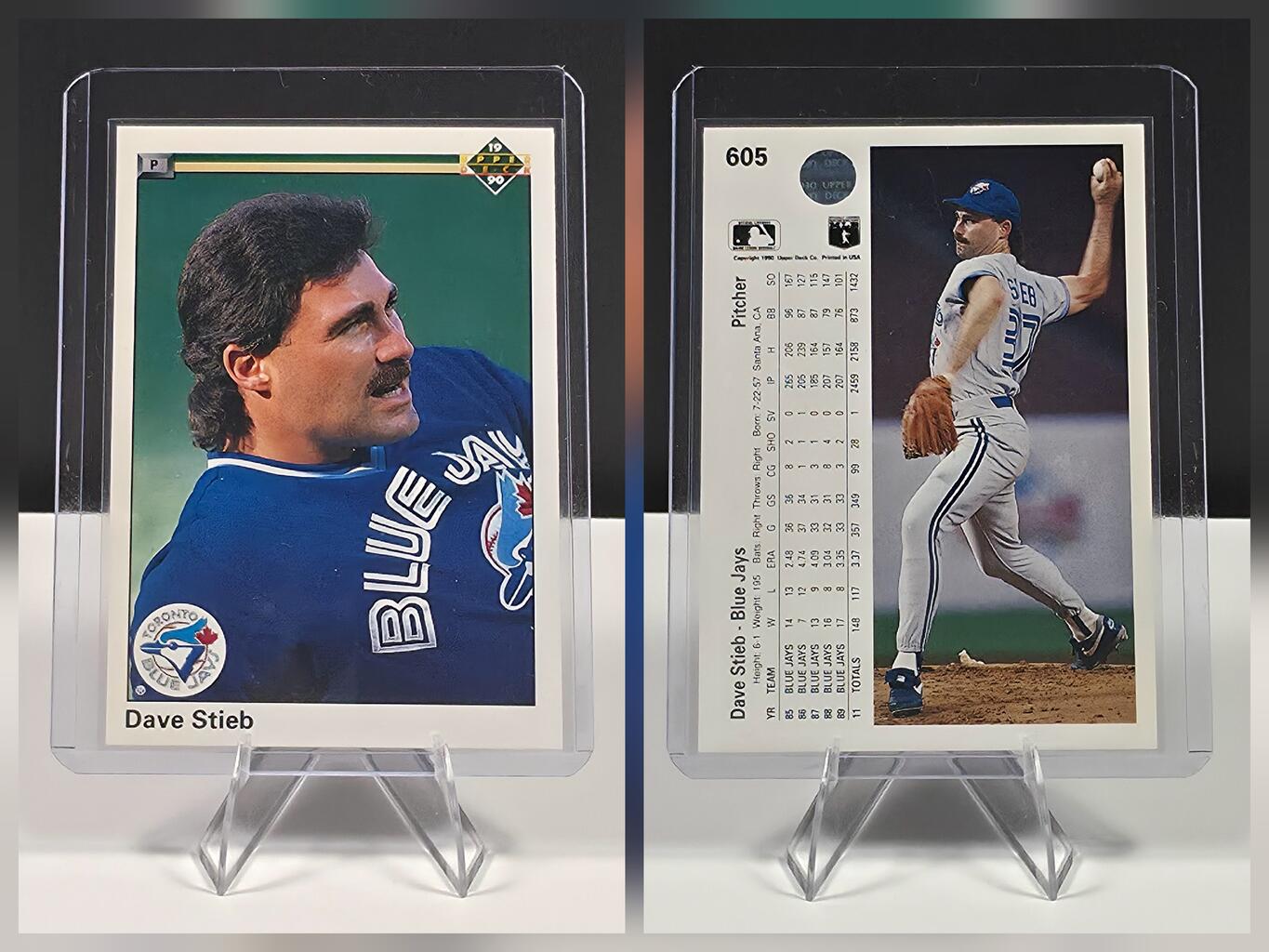
Have you ever worked hard for something, came so close you could almost touch it—and then watched it disappear?
Dave Stieb knew that feeling.
Not once.
Not twice.
But three times.
ONE MORE OUT
In September 1988, Stieb was about to do something rare: pitch an entire game without allowing the other team a single hit.
He needed one more out.
Then a ball took a strange bounce.
A player reached base with a hit.
Just like that, the moment was gone.
Days later, Stieb did it again.
He went almost the entire game without allowing a hit.
Once again, he needed one more out.
This time, a softly hit ball dropped where no one could catch it.
Gone again.
Two incredible performances. Two painful endings.
AND THEN IT HAPPENED AGAIN
The next year, Stieb came even closer to something more difficult.
He was trying to pitch a perfect game—one where no opposing player reaches base at all.
He retired 26 players in a row.
Only one remained.
Then the next batter hit a double.
For the third time, Stieb had reached the final step without getting the ending he wanted.
Think about that beyond baseball.
You prepare. You work. You do almost everything right.
And something outside your control still changes the result.
What do you do after that?
Stieb came back.
ONE MORE CHANCE
On September 2, 1990, he found himself there again.
Another game without allowing a hit.
Another final inning.
Another chance.
This time, the last ball was hit into the air.
A teammate moved toward it.
He caught it.
After all those almosts, Dave Stieb finally had his no-hitter.
👀 LOOK AT THE CARD AGAIN
Now look at his card.
It doesn't show the strange bounce, the ball that dropped safely, or how it felt to come so close again and again.
But knowing the story changes the card.
It can remind us of something bigger than baseball:
Doing your best does not mean you can control the ending.
💭 HIYASAT REFLECTION
Maybe your almost isn't a baseball game.
Maybe it's a job you nearly got.
A goal you nearly reached.
A plan that almost worked.
Sometimes we can do everything we know how to do—and still fall short.
Dave Stieb couldn't control where every ball landed.
But he could decide whether he would come back.
And when his next chance arrived, he was there.
We don't control every bounce.
We don't control every ending.
But when life gives us another chance, we can choose to show up again.
Because sometimes all you really control... is the next pitch.
Chapter 2 · Duane Ward — WAIT
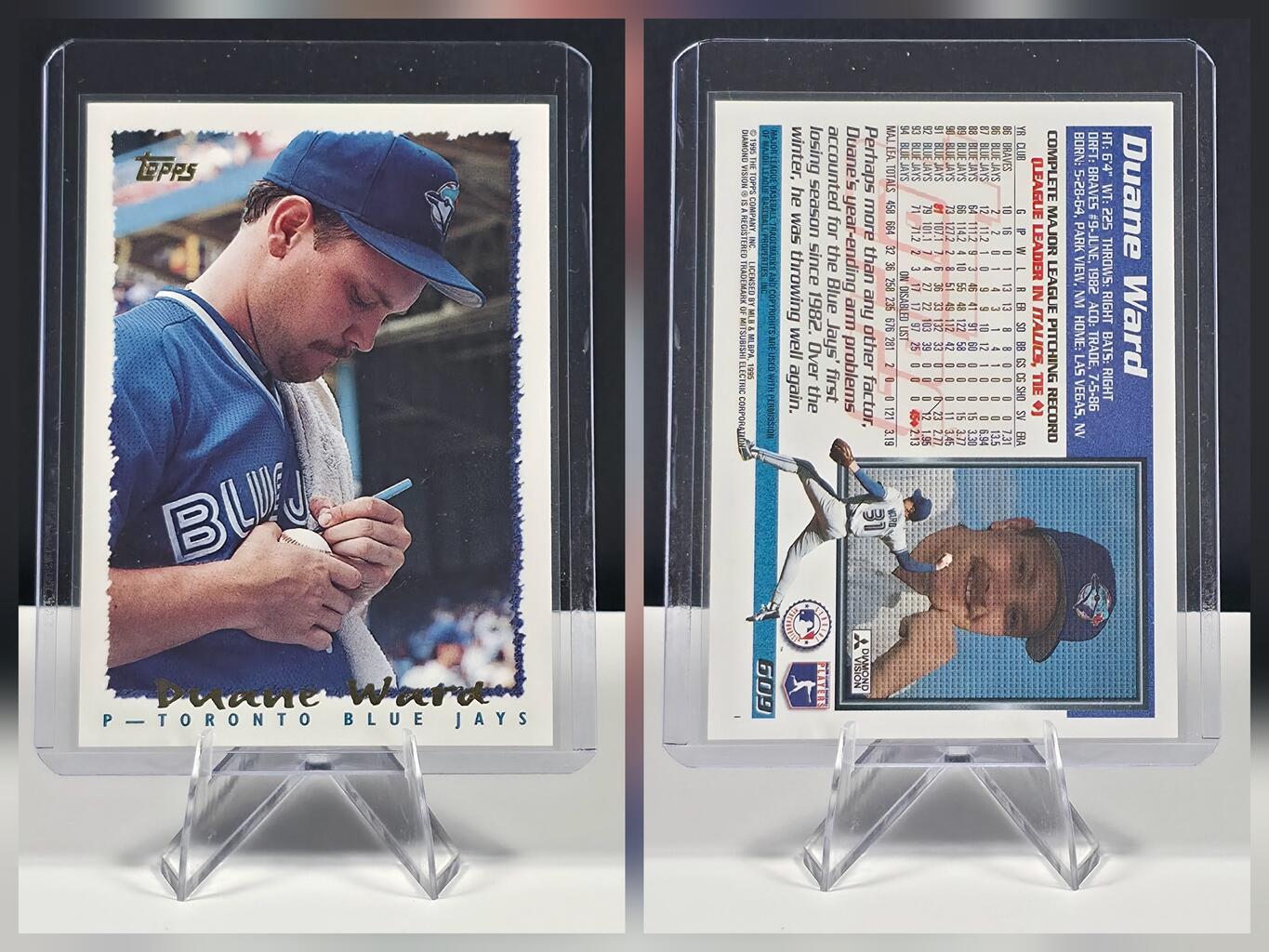
Sometimes, you can be ready before the opportunity is yours.
You can do the work. You can prove you belong. You can become someone people depend on.
And still have to wait.
For years, Duane Ward was an important part of the Toronto Blue Jays bullpen.
But the final inning belonged to someone else.
His name was Tom Henke.
So what do you do when you're ready, but it still isn't your turn?
BEFORE IT WAS HIS TURN
Ward joined the Blue Jays in 1986 and became one of their most dependable relief pitchers.
Henke was Toronto's closer, the pitcher trusted to protect a lead at the end of a game.
So Ward found another way to matter.
He pitched before Henke. He handled important innings. He became someone Toronto could rely on when games were still hanging in the balance.
In 1992, Toronto reached the World Series.
Ward was there. Henke was still the closer.
And Ward helped the Blue Jays become champions without needing the biggest role to prove that his role mattered.
WHEN THE DOOR OPENED
After that championship, Henke left Toronto.
Suddenly, the final inning was available.
Ward didn't have to become ready overnight.
In 1993, he recorded 45 saves, became an American League All Star, and helped Toronto win another World Series.
This time, Ward was the closer.
The opportunity had changed.
But Ward had been preparing long before the door opened.
WHAT WAITING CAN LOOK LIKE
It would be easy to say Ward's story proves that patience eventually gets rewarded.
Life doesn't always work that way.
Waiting does not guarantee that the opportunity will come.
Ward's journey reveals something more useful.
While the role belonged to someone else, he kept pitching, contributing, and becoming someone his team could trust.
He wasn't simply waiting for his turn.
He was waiting with purpose.
You cannot always control when the door opens.
But you can decide what you do while you wait.
👀 LOOK AT THE CARD AGAIN
Look at Duane Ward on this card.
Now you can see more than a baseball player.
You can see the years before the opportunity became his and the work that made him ready when it finally arrived.
💭 HIYASAT REFLECTION
Maybe there is something you are waiting for right now.
A promotion. A chance. A responsibility. An opportunity to show what you can do.
You may not control when your opportunity arrives.
You can control what you are becoming before it does.
Will you be ready when your turn comes?
Chapter 3 · Brad Cornett — ARRIVE
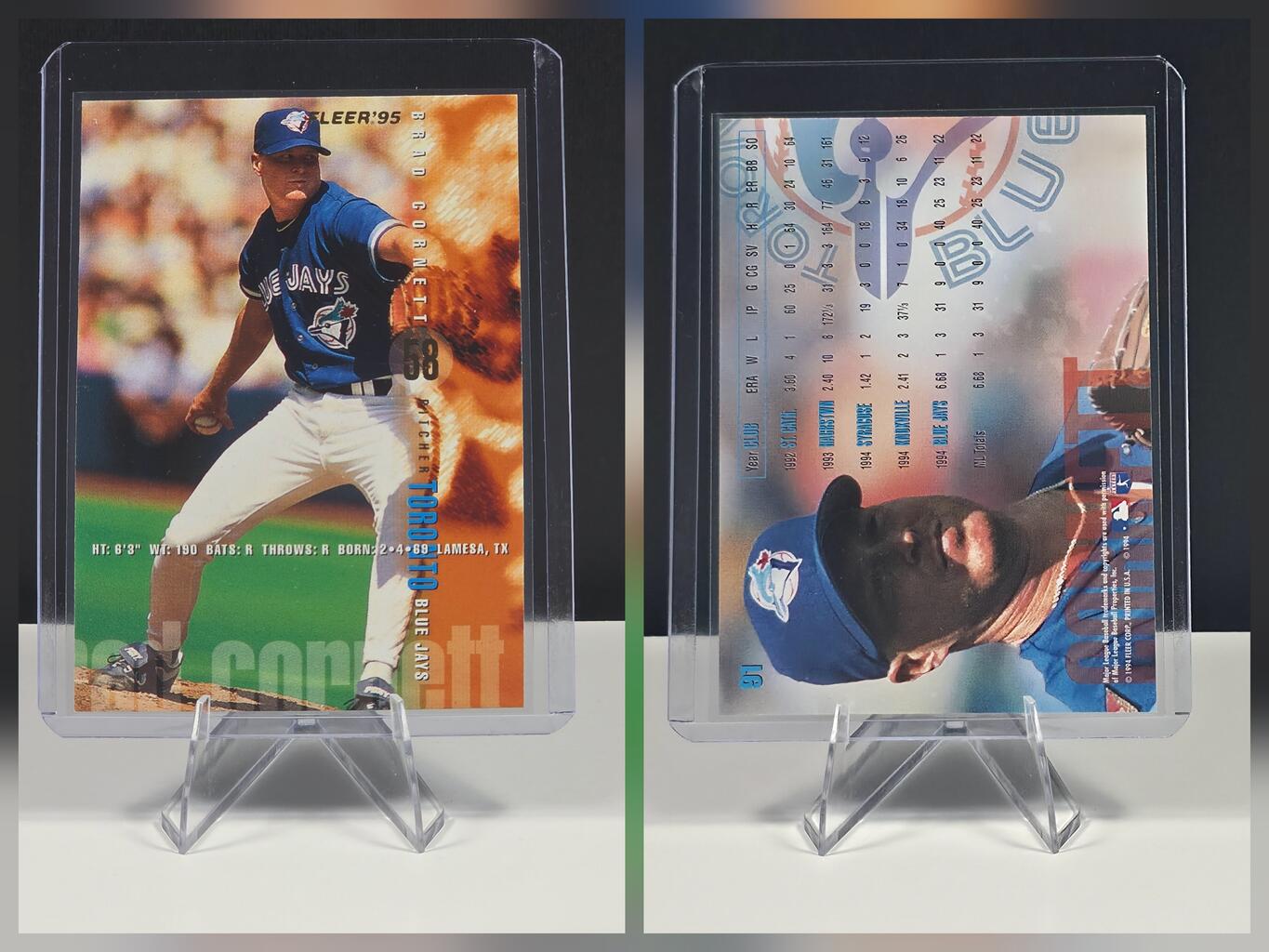
Some arrivals last for years.
Brad Cornett's Major League Baseball career lasted 14 games.
But that's not the whole story.
HE GOT THERE
Brad Cornett wasn't selected in the Major League Baseball draft.
But another door opened.
The Toronto Blue Jays signed him in 1992, giving him an opportunity to begin climbing through professional baseball.
He moved quickly.
On June 8, 1994, roughly two years after signing, Cornett reached the major leagues.
In his first game, he pitched five innings and allowed only one run.
For that night, there was no higher level to reach.
He had arrived.
Cornett didn't almost become a Major League Baseball player.
He became one.
THE MAJORS ENDED. THE JOURNEY DIDN'T.
Cornett appeared in 14 major-league games across 1994 and 1995.
His final MLB appearance came in May 1995.
It would be easy to stop the story there.
But Cornett didn't stop playing professional baseball when his time in the majors ended.
He continued pitching afterward, spending time with other organizations and eventually playing independent professional baseball into the 2000s.
Those 14 games were not his entire baseball journey.
They were one remarkable part of it.
We don't need to guess what Cornett thought or felt about the experience to recognize what happened.
He reached baseball's highest level.
His time there was brief.
Then his journey continued somewhere else.
👀 LOOK AT THE CARD AGAIN
Now this card tells a different story.
It doesn't represent a career that was too short to matter.
It preserves an arrival.
Sometimes we treat reaching the destination as the ending.
Get the job.
Make the team.
Earn the promotion.
Reach the goal.
Then life reminds us that even destinations can be temporary.
Something we worked years to reach can disappear sooner than we expected.
That doesn't erase what happened.
Something doesn't have to last forever to have mattered.
💭 HIYASAT REFLECTION
Think about something meaningful in your own life that didn't last as long as you hoped.
Maybe it was an opportunity.
A job.
A friendship.
A season of your life.
Its ending doesn't make the experience unreal.
Sometimes the question isn't how long we managed to hold onto something.
It's whether we can recognize what it meant while it was ours.
Brad Cornett arrived.
Then the journey continued.
Do you measure what mattered by how long it lasted?
Chapter 4 · Rob Butler — SHORT
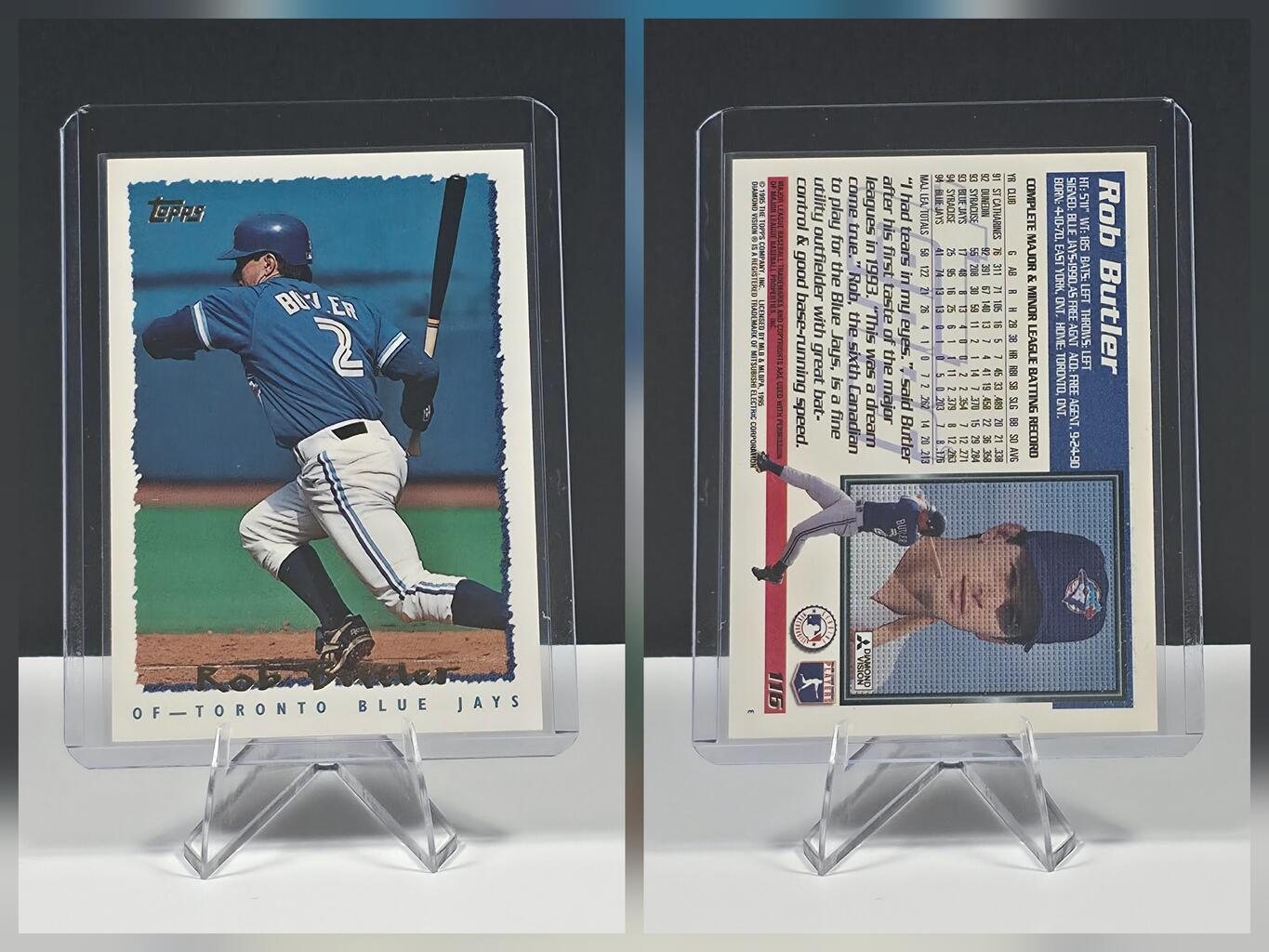
Some stories are easy to overlook.
Rob Butler played only 109 games in the major leagues.
But hidden inside that short career is a moment that reached baseball's biggest stage.
17 GAMES. 1993.
Butler grew up in East York, Ontario.
In 1993, at 23 years old, he reached the major leagues with the Toronto Blue Jays.
Toronto was already the defending World Series champion. The team was filled with established stars, and Butler was a rookie trying to find his place.
He played only 17 regular-season games.
Then Toronto reached the playoffs.
And Butler went with them.
Eventually, the young rookie stepped into a World Series batter's box.
He received just two at-bats.
He got one hit.
He scored one run.
And Toronto became World Series champions again.
Butler wasn't one of the stars who carried the Blue Jays there.
His part was small.
His part was real.
HOW BIG DOES YOUR PART HAVE TO BE?
That 1993 season could have looked like the beginning of a long major-league career.
It wasn't.
Butler eventually played only 109 MLB games.
And maybe that's why this card is worth examining.
We often measure our importance by the size of our role.
Were you the leader?
How long were you there?
How much did you contribute?
Did people notice?
Sometimes we make our part sound bigger because we're afraid that if it was small, it couldn't have mattered.
But Butler's story doesn't need that.
His contribution to Toronto's championship doesn't have to become larger with time.
It can remain exactly what it was.
Small.
Real.
And his.
👀 LOOK AT THE CARD AGAIN
This isn't the card of the player who carried Toronto to a championship.
It's the card of someone who received a small place inside something much bigger.
Maybe you've experienced that too.
You helped, but someone else led.
You were there, but only briefly.
You contributed one piece while others carried much more.
You don't have to rewrite your role afterward.
You don't have to make it bigger.
💎 HIDDEN GEM — SHORT
You don't have to make your part bigger to make it meaningful.
💭 HIYASAT REFLECTION
Think about something important you've been part of.
Don't make your contribution bigger.
Don't make it smaller.
See it honestly.
Then ask yourself:
Can you appreciate the part you played without needing it to have been bigger?
Chapter 5 · Pat Borders — MOMENT
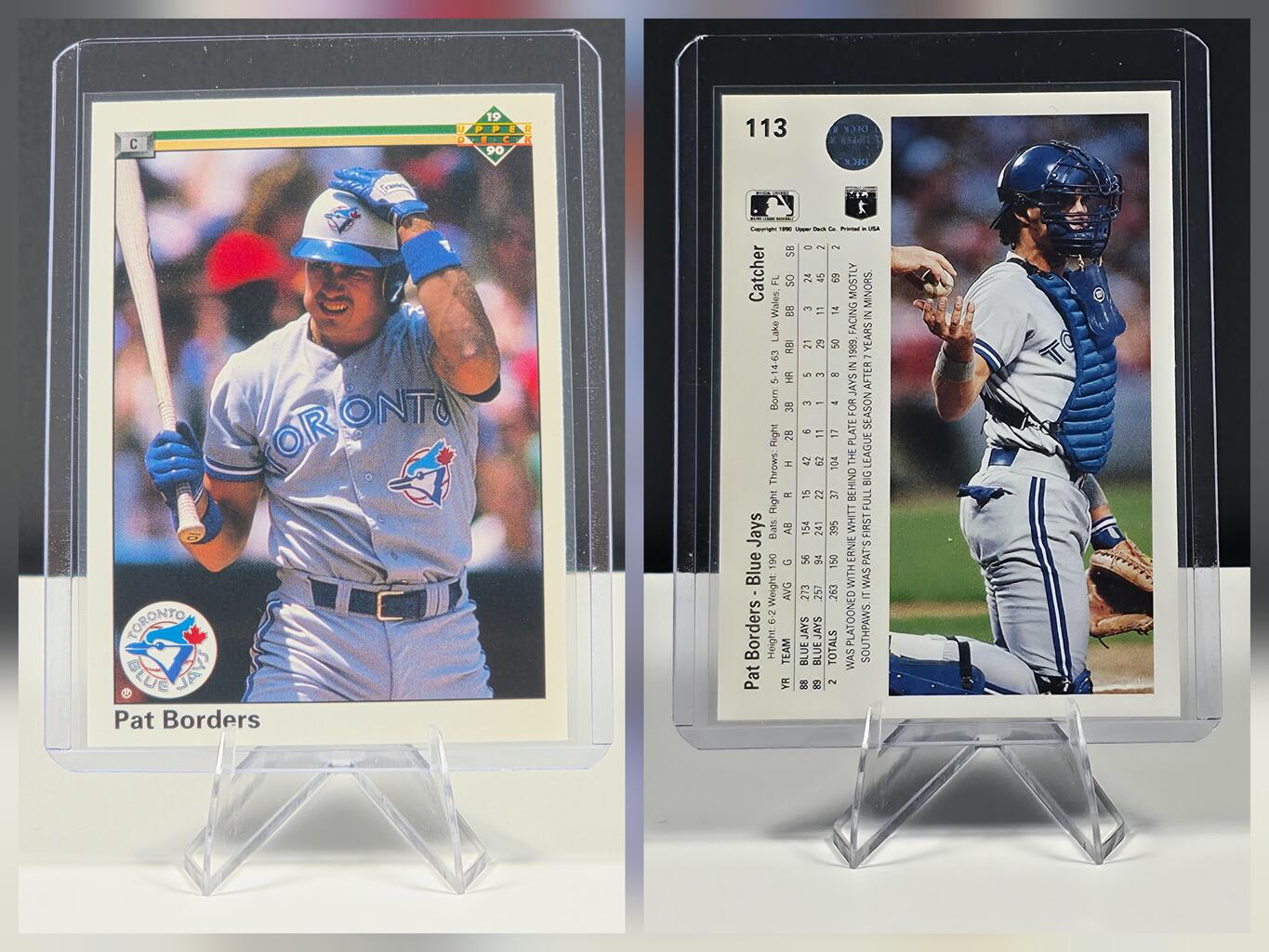
Some moments tell you they are important.
Others look ordinary until much later.
For years, Pat Borders had been doing the demanding work of a major-league catcher.
Then came October 1992.
SIX GAMES
The Toronto Blue Jays had never won a World Series.
They reached baseball's biggest stage in 1992 against the Atlanta Braves.
Toronto had plenty of recognizable names.
Borders wasn't the player most people would have expected to become the story of the series.
But over six games, he collected nine hits, three doubles and a home run.
He batted .450.
And behind the plate, he continued doing the job he had already been doing for years.
Toronto won Game 6 in 11 innings.
For the first time, the Blue Jays were World Series champions.
Pat Borders was named World Series MVP.
HOW LONG IS SIX GAMES?
Against an entire baseball career, six games aren't very long.
Borders had played hundreds of games before that World Series.
He would play hundreds more afterward.
He would help Toronto win another championship in 1993. His major-league career would continue for years.
But those six games in October 1992 would remain one of the defining pieces of his story.
Maybe that's because time and significance aren't always the same thing.
Something can last a long time without becoming unforgettable.
And something brief can stay with us for years.
👀 LOOK AT THE CARD AGAIN
At first, you see Pat Borders.
A catcher.
A Toronto Blue Jay.
But look closer.
Behind this card is a career.
And somewhere inside that long career are six games when the moment became much bigger than anyone might have expected.
The card hasn't changed.
What you see in it has.
💎 HIDDEN GEM — MOMENT
We often imagine that we'll recognize life's important moments while they're happening.
Sometimes we don't.
Sometimes an ordinary day, conversation, opportunity or experience becomes meaningful only when we look back.
Pat Borders couldn't know how every moment of his career would eventually be remembered.
Neither can we.
You don't always know which moments will matter most. Show up for the one you're in.
💭 HIYASAT REFLECTION
Think about the moments you're living right now.
Some will pass quietly.
Some you may barely remember.
But one of them might someday mean much more than you realize today.
What if one of the moments you'll remember someday is happening right now?