Five careers. Five reputations. One question: what remains when the noise fades?
The five stories
Chapter 1 · Nick Van Exel — PROVE
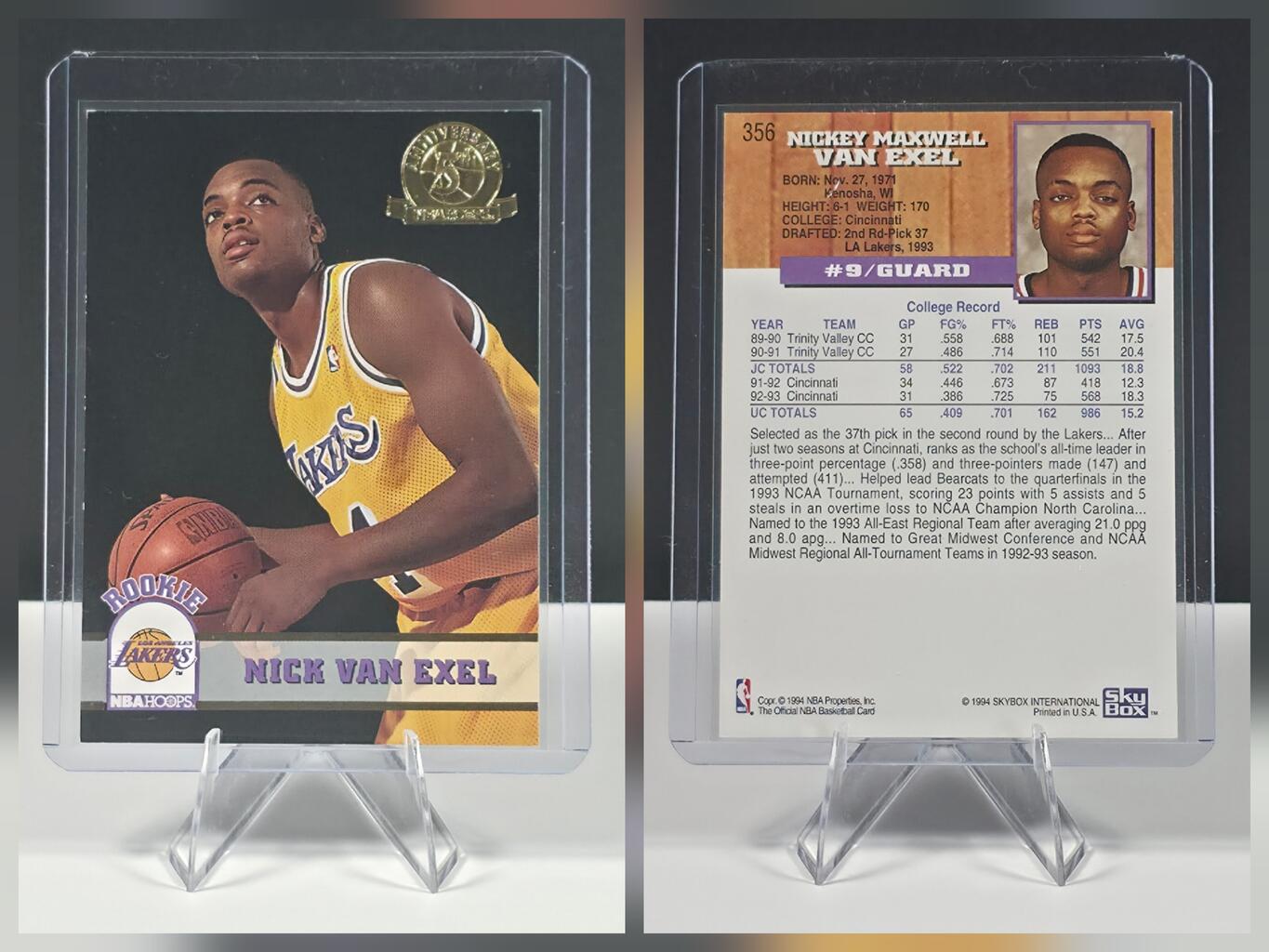
Physical Card: 1993–94 NBA Hoops #356 — Nick Van Exel Rookie Card, Los Angeles Lakers
Nick Van Exel entered the NBA without the kind of path that usually announces a future star.
Before Cincinnati, there was junior college. Before becoming an NBA starter, there was the uncertainty of the second round. The Los Angeles Lakers selected him 37th overall in the 1993 NBA Draft, a place where opportunity was real but guarantees were few.
Van Exel responded by playing as if every possession carried a message.
He was quick, creative, fearless with the ball, and willing to take shots other players might avoid. His confidence could look almost reckless, but it was also part of what made him different. He did not play like someone waiting for permission to belong.
That mattered in Los Angeles.
The Lakers were moving through a different era, searching for a new identity after the championship years that had defined the franchise. Van Exel became one of the young players who helped push that transition forward. As a rookie, he earned NBA All-Rookie Second Team honors. In 1998, he became an NBA All-Star.
The player taken in the second round had made himself impossible to overlook.
But Van Exel’s story was never completely quiet. His intensity, emotion, and confidence sometimes created friction. Those moments became part of the public memory around him, just as his deep shots, quick moves, and late-game courage did.
That tension is part of why his story belongs in WHEN THE NOISE FADES.
Because when enough time passes, the loudest moments do not have to be the only ones that remain.
Look again at the career. Van Exel played 13 NBA seasons, adapted to changing teams and roles, and remained a dangerous scorer and playmaker long after his first opportunity in Los Angeles. What began as a second-round chance became a long professional career.
He had already proved something before anyone decided what his reputation would become.
👀 LOOK AT THE CARD AGAIN
This rookie card captures Van Exel before the All-Star selection, before the later teams, and before the reputation that would follow him. The image holds a player at the beginning, with almost everything still unproven.
That is what makes it worth another look.
💎 HIDDEN GEM — PROVE
Sometimes proving you belong begins before anyone else believes you do.
💭 HIYASAT REFLECTION
There are moments when opportunity arrives without reassurance. No guarantee. No perfect beginning. No one telling you that you are ready.
Van Exel’s journey reminds us that being overlooked does not decide what happens next. Sometimes the answer is not to wait for recognition. It is to keep showing what you can do until the opportunity can no longer ignore you.
Chapter 2 · Larry Johnson — ADAPT
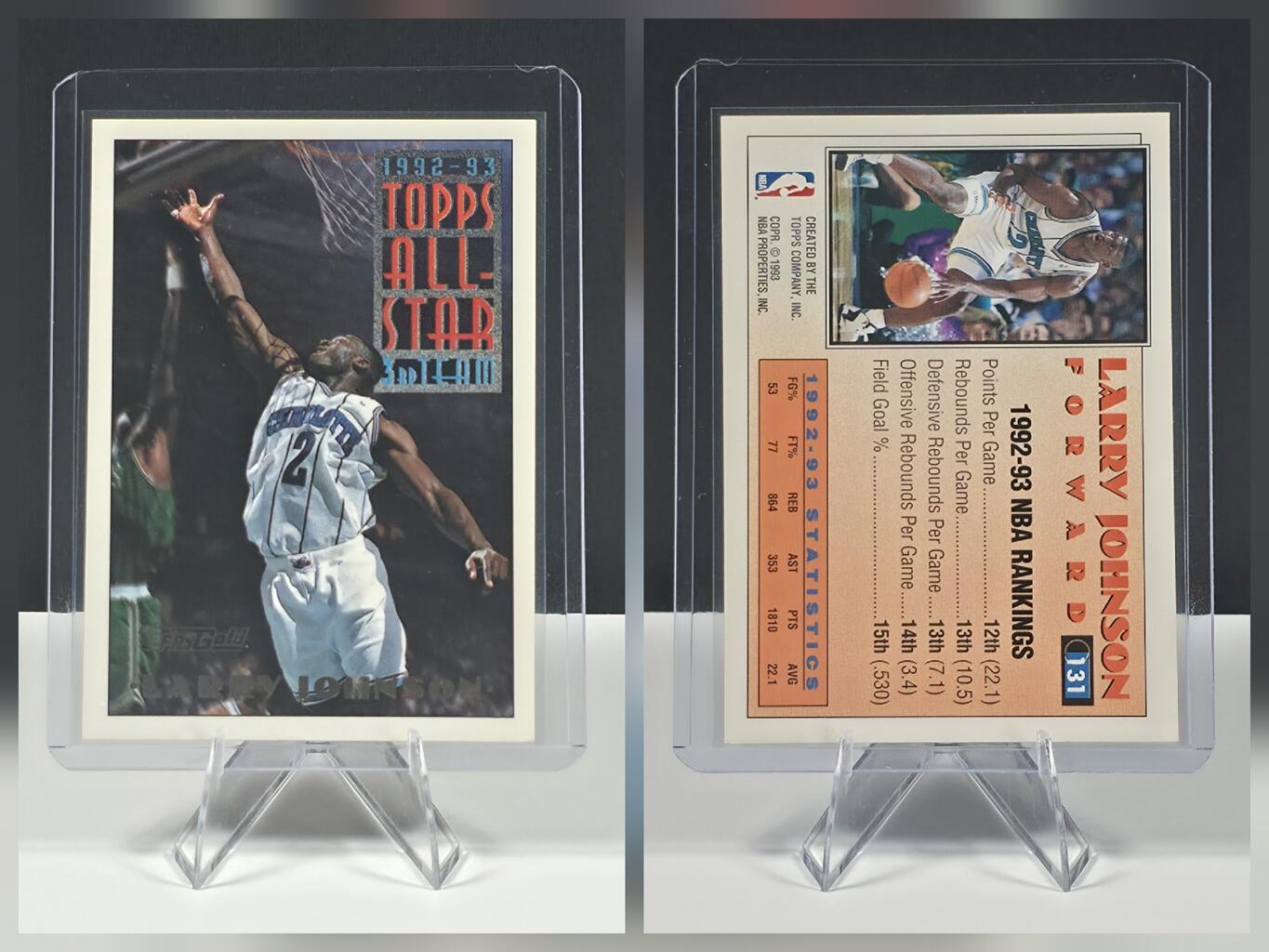
Physical Card: 1993–94 Topps #131 — Larry Johnson, 1992–93 All-Star Weekend, Charlotte Hornets
Larry Johnson arrived in the NBA looking built for impact.
Charlotte selected him first overall in the 1991 NBA Draft. Strong, explosive, and unusually quick for his size, Johnson attacked the basket with a combination of power and personality that made him one of the league's most recognizable young players.
The results came quickly.
He won Rookie of the Year in 1992. The following season, he became an NBA All-Star and earned All-NBA Second Team honors. With Alonzo Mourning and a rising Hornets team around him, Johnson seemed to be entering the kind of career that would be defined by physical dominance.
Then his body changed the direction of the story.
Back problems began taking away some of the explosiveness that had made him so dangerous. The player who could once overwhelm defenders could no longer depend on exactly the same advantages. For an athlete whose identity had been built around strength and athleticism, that kind of change could have become an ending.
Instead, Johnson adjusted.
He expanded his shooting range. He became more willing to work away from the basket. He learned to contribute through positioning, passing, strength, and experience rather than relying only on the burst that had defined his early years.
Eventually, his career took him from Charlotte to New York.
With the Knicks, Johnson was no longer simply the young star expected to carry a franchise. His role changed again. He became part of a veteran team where defense, toughness, spacing, and timely plays mattered as much as individual numbers.
One of those moments came during New York's run to the 1999 NBA Finals, when Johnson converted a famous four-point play against Indiana in the Eastern Conference Finals.
The moment looked dramatic.
The adaptation that made it possible had taken years.
That is what can disappear when we remember only the loudest version of an athlete. Johnson was once known for power, dunks, and the larger-than-life personality of "Grandmama." But the longer story includes something quieter: a player learning how to remain useful after his original way of succeeding could no longer be taken for granted.
👀 LOOK AT THE CARD AGAIN
This card captures Johnson near the beginning, when explosiveness still seemed inseparable from who he was as a player.
Knowing what came later changes the image.
It is no longer only a picture of what he could do then. It becomes a reminder that eventually he would have to discover what else he could become.
💎 HIDDEN GEM — ADAPT
Growth sometimes begins when your old strengths are no longer enough.
💭 HIYASAT REFLECTION
Change can feel like loss when it takes away something we once depended on. A skill, a role, a physical ability, or even a version of ourselves that once felt permanent.
Johnson's career suggests another possibility. Adapting does not mean pretending nothing was lost. It means recognizing what remains, developing what was overlooked, and finding another way to contribute when life no longer allows us to succeed exactly as we once did.
Chapter 3 · Isaiah Rider — WEIGHT
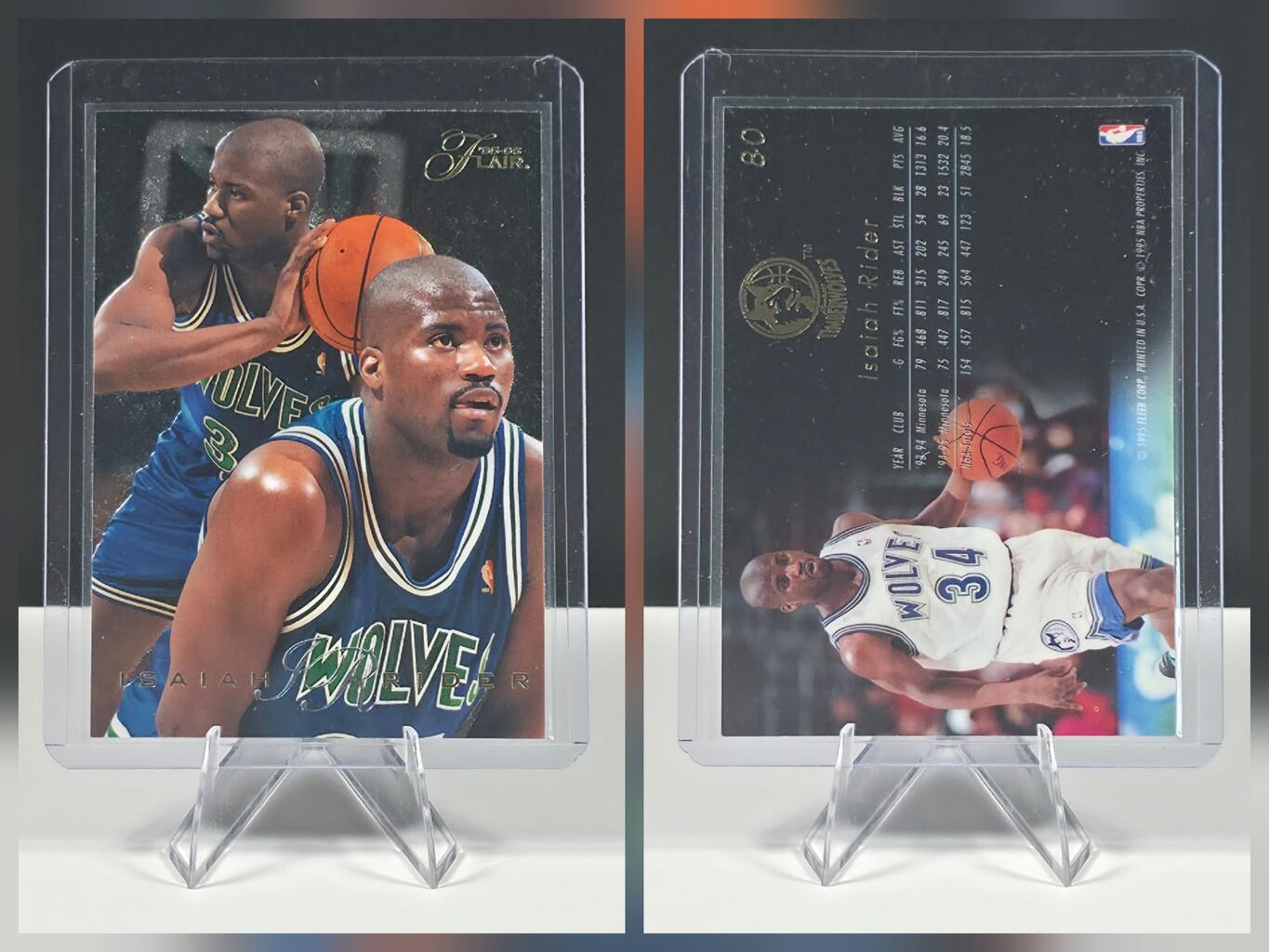
Physical Card: 1995–96 Flair #80 — Isaiah Rider, Minnesota Timberwolves
Isaiah Rider entered the NBA carrying obvious talent.
Minnesota selected him fifth overall in the 1993 NBA Draft. Athletic, powerful, and capable of scoring in ways that immediately drew attention, Rider looked like the kind of player who could become one of the league's brightest young stars.
The signs appeared quickly.
As a rookie, he averaged more than 16 points per game, earned All-Rookie honors, and won the 1994 Slam Dunk Contest. By his second season, his scoring average had climbed above 20 points per game.
The ability was never difficult to see.
Rider could attack the rim, shoot from distance, and create moments that made people stop watching everything else. His athleticism gave him a presence that seemed capable of carrying a franchise forward.
But talent does not travel alone.
As Rider's career continued, disciplinary problems, suspensions, conflicts, and missed obligations became part of the story around him. Those moments followed him through different teams and gradually became difficult to separate from the player himself.
That is what makes Rider complicated to remember.
The temptation is to choose one version: the gifted scorer or the troubled professional. But both existed at the same time.
There was real achievement.
Rider played nine NBA seasons and averaged more than 16 points per game for his career. He also became part of the 2000–01 Los Angeles Lakers championship team, even though his role had become far different from the one imagined when he entered the league.
The championship ring remained.
So did the questions about what his career might have become.
That is the weight in Rider's story.
It is not simply the weight of mistakes. It is the weight of possibility—the distance between what someone is capable of doing and what ultimately becomes of that ability.
👀 LOOK AT THE CARD AGAIN
This card captures Rider while so much still seemed possible.
The image shows the athlete before the full story was known: the scoring ability, the explosiveness, the expectations, and the promise of what might come next.
A card can freeze possibility.
Time reveals what was carried with it.
💎 HIDDEN GEM — WEIGHT
Talent and burden can exist in the same person.
💭 HIYASAT REFLECTION
People are rarely only their best moment or their worst one. Strength can exist beside struggle. Opportunity can exist beside choices that make the road harder.
Rider's story does not ask us to erase consequences or excuse what happened. It asks us to look at the whole picture.
Sometimes the heaviest thing a person carries is not failure itself, but the knowledge of what might have been possible.
Chapter 4 · Vernon Maxwell — EDGE
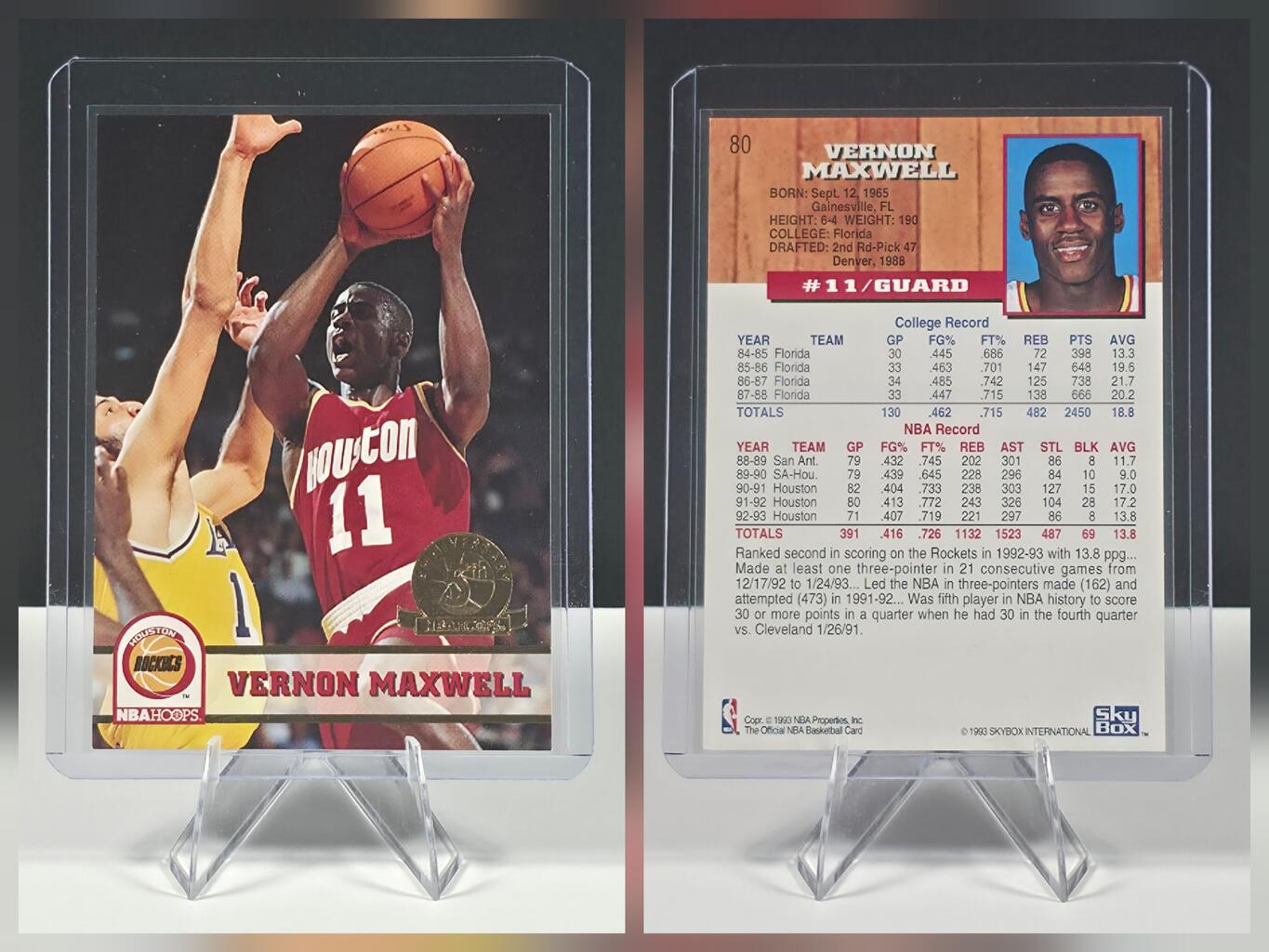
Physical Card: 1993–94 NBA Hoops #80 — Vernon Maxwell, Houston Rockets
Vernon Maxwell played basketball close to the edge.
He entered the NBA as the 47th overall pick in the 1988 Draft, far from the part of the board where stars are usually expected to emerge. Yet Maxwell built a 13-season career by playing with a level of confidence and intensity that made him difficult to ignore.
In Houston, that intensity became part of his identity.
Maxwell was fearless with the ball. He could attack, shoot from deep, and take difficult shots without appearing intimidated by the moment. On January 26, 1991, he scored a career-high 51 points against Cleveland. Thirty of them came in the fourth quarter.
When Maxwell became hot, hesitation seemed to disappear.
That fearlessness mattered for the Rockets.
By the 1993–94 season, he was Houston's starting shooting guard. He played 75 regular-season games, started 73 of them, and helped a team built around Hakeem Olajuwon reach the NBA Finals.
Houston defeated the New York Knicks in seven games to win the first championship in franchise history.
Maxwell had reached the highest level of the game.
But the same career also carried another side.
His emotion could cross boundaries. In February 1995, Maxwell left the court during a game in Portland, entered the stands, and struck a heckling spectator. The NBA suspended him for 10 games and fined him $20,000.
There were circumstances surrounding the confrontation, including Maxwell's account of deeply personal comments directed toward him. But the league was clear that entering the stands and striking a fan was unacceptable.
That moment became part of his reputation.
And that is where Maxwell's story becomes more complicated than a nickname or a highlight.
The qualities that made him dangerous on the court—fearlessness, intensity, refusal to back down—could also become difficult to contain. The line between competitive fire and losing control was sometimes painfully thin.
Maxwell spent much of his career walking near that line.
👀 LOOK AT THE CARD AGAIN
This card comes from the season Houston would become NBA champion.
Look at Maxwell before the later controversy became part of how many people remembered him. The card captures a player whose intensity still looked mostly like an advantage.
Knowing what followed changes the image.
The edge was already there.
💎 HIDDEN GEM — EDGE
A strength without control can become something else.
💭 HIYASAT REFLECTION
Some of our strongest qualities come with responsibility.
Confidence can become arrogance. Passion can become anger. Courage can become recklessness. The trait itself is not always the problem. What matters is whether we learn where its limits are.
Maxwell's story reminds us that strength is not only about how much intensity we possess.
Sometimes real strength is knowing when to pull it back.
Chapter 5 · Latrell Sprewell — REMAIN
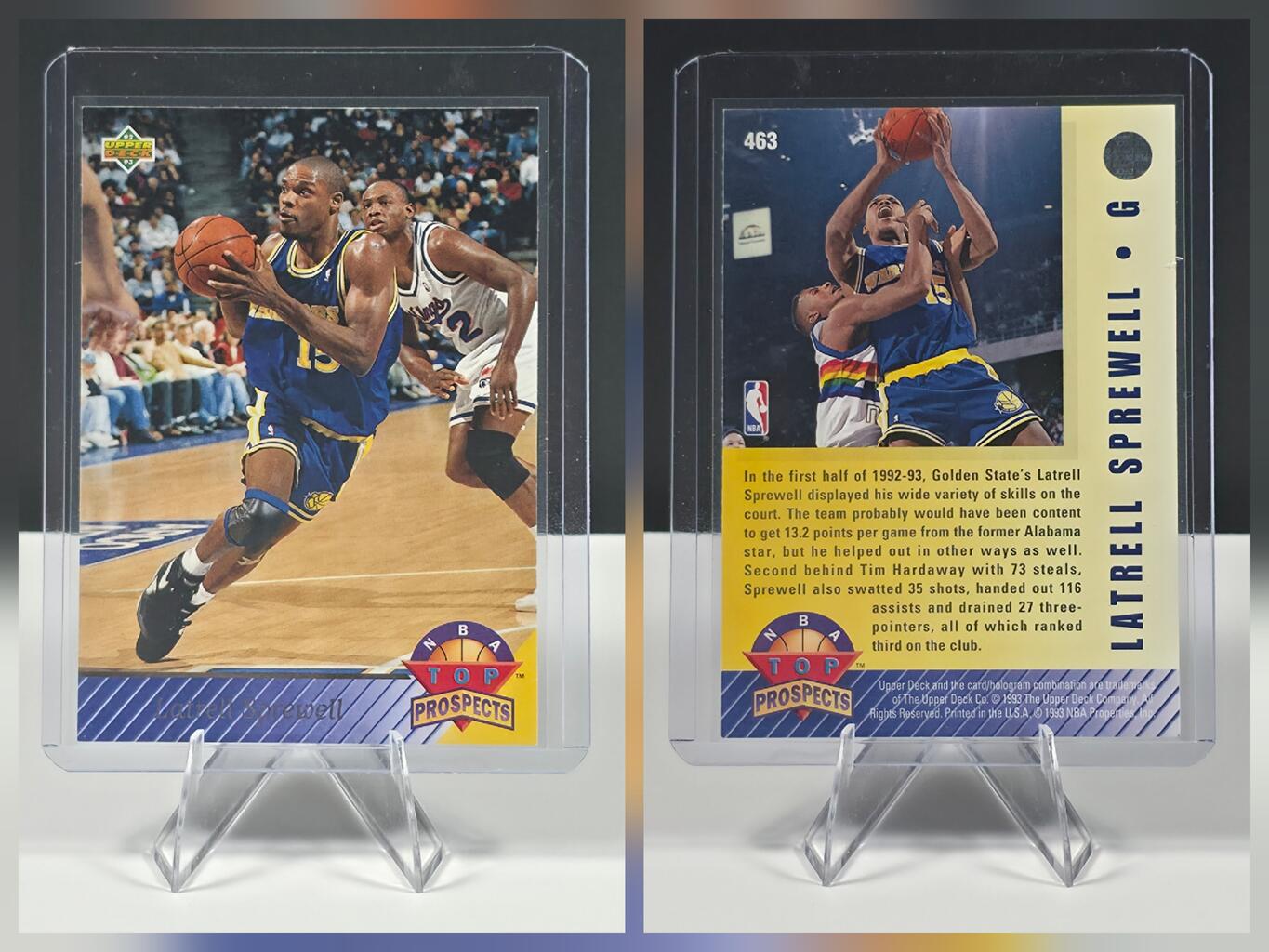
Physical Card: 1992–93 Upper Deck #463 — Latrell Sprewell, Top Prospects, Golden State Warriors
Latrell Sprewell's career asks an uncomfortable question.
What remains when one moment becomes louder than everything that came before or after it?
Golden State selected Sprewell 24th overall in the 1992 NBA Draft. He entered the league without the expectations placed on the highest picks, but it did not take long for people to notice him.
By his second season, he was averaging 21 points per game.
He became an NBA All-Star, earned All-NBA First Team honors, and was named to the All-Defensive Second Team. His combination of scoring, defense, speed, and relentless energy made him one of the league's rising guards.
The talent was real.
So was what happened later.
During a Warriors practice in December 1997, Sprewell physically attacked head coach P.J. Carlesimo. The NBA imposed a one-year suspension, while Golden State terminated his contract. An arbitrator later reinstated the contract and reduced the suspension to 68 games.
It was a serious incident with serious consequences.
It also became the moment most closely attached to his name.
Sprewell eventually returned to the NBA with the New York Knicks. In 1999, he helped an eighth-seeded New York team make an improbable run to the NBA Finals. During that postseason, he became one of the Knicks' most important scorers.
His career continued.
He returned to the All-Star Game. Years later, with Minnesota, Sprewell joined Kevin Garnett and Sam Cassell on a team that produced the best regular season in Timberwolves history at the time and reached the 2004 Western Conference Finals.
By the end, Sprewell had played 13 NBA seasons.
None of those achievements erase what happened in 1997.
But what happened in 1997 does not erase everything else either.
That is where the story becomes larger than reputation.
Accountability and perspective can exist together. A person can be responsible for a damaging moment while still having a life and a story that extend beyond it.
When the noise fades, what remains is not a cleaner story.
It is a fuller one.
👀 LOOK AT THE CARD AGAIN
This card calls Sprewell a "Top Prospect."
It captures him before the All-Star selections, before the Finals, before Minnesota, and before the incident that would permanently change how many people remembered him.
The card holds possibility before reputation arrived.
Knowing the whole story makes that possibility feel different.
💎 HIDDEN GEM — REMAIN
A single moment can change a legacy without containing the whole life.
💭 HIYASAT REFLECTION
We often remember people through their loudest moment.
Sometimes it is their greatest success. Sometimes it is their worst decision.
But understanding someone fully does not require us to excuse what was wrong or forget its consequences. It asks us to hold more than one truth at the same time.
Sprewell's story reminds us that accountability matters.
So does the rest of the story.
When the noise finally fades, what remains may not be simple—but it may be closer to the truth.